Jacob Barber’s arraignment and bail hearing
Defending JacobJacob Barber’s arraignment and bail hearing turn a legal appearance into an early contest over who Jacob is and what the case means. The court keeps bail at the amount set after his arrest and permits Jonathan Klein to represent him, yet the hearing shows how quickly prosecution arguments can shape a second trial in newspapers and public discussion. Later, Neal Logiudice’s opening statement makes that contest explicit: he offers jurors a story of a teenager who “snapped,” while the narrator identifies the missing motive beneath the prosecution’s narrative.
The arraignment in Courtroom 6B
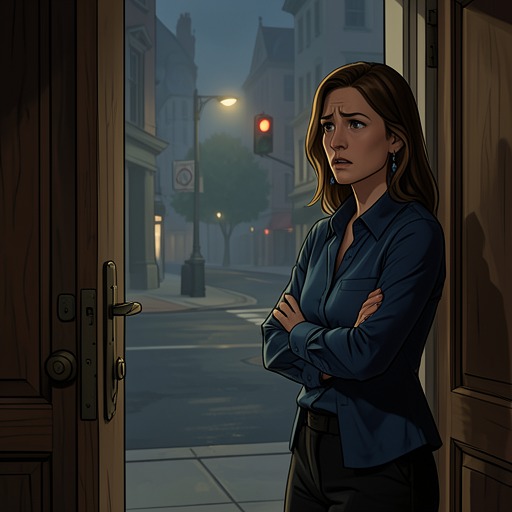
The hearing unfolds in Courtroom 6B, where an extra jury box has been fitted with a television camera providing a shared feed to local stations. As Andrew Barber and his family wait under the lens, they sit silently, aware of the public gaze. Andrew notices his large, pale hands and scuffed knuckles, which seem out of place at the defense table; a courtroom he once knew as familiar now feels different because he occupies it as the father of the accused.
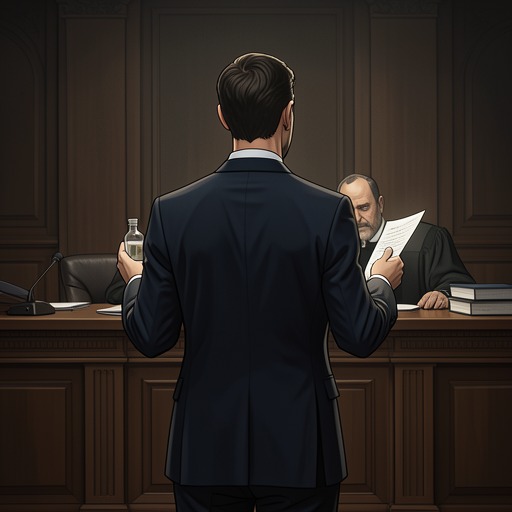
When the clerk calls the indictment, Jacob is brought in from the lockup by two court officers and made to stand before the jury box. He finds his family in the crowd, then looks down and fusses with his suit and tie. The suit, chosen by Laurie and delivered by Klein, is already too small: Jacob is growing out of it, and cannot settle the coat properly on his shoulders. Andrew reads the fidgeting not as vanity, as reporters later would, but as the awkwardness of a frightened boy unsure where to put his hands. Klein joins him at the defense table and places a hand on his back, visibly signaling that he is willing to stand beside his young client.
Bail and the challenge to counsel
Logiudice asks for bail of five hundred thousand dollars cash or five million dollars surety. He grounds the request in the alleged savagery of the crime, the likelihood of conviction, Jacob’s supposed sophistication, and his family background. The argument brings Andrew’s former profession into the proceeding, casting the household as one in which criminal law is “the family business.” Andrew suspects the reference is no offhand flourish: he reads it as a calculated attempt to turn the family history against Jacob.
The judge leaves bail at ten thousand dollars, the amount set on the day Jacob was arrested. Her decision reflects that Jacob has nowhere to run and that his family is known to the court. The contrast between the prosecution’s proposed sum and the modest amount imposed makes the ruling a clear defeat for Logiudice’s bid to treat flight as a serious risk.
Logiudice then objects to Klein’s appearance as defense counsel, alleging a conflict because Klein had once represented another suspect in the homicide. Klein answers that the earlier client was never accused, that their contact at the Newton police station was limited to advising him not to answer questions, and that Klein never discussed this case with him or received relevant confidential information. He denies that any conflict exists. The judge notes the objection and overrules it, telling Logiudice not to get carried away.
The ruling does not end the accusation’s public life. Andrew expects the next day’s papers, talk radio, and online discussion to debate whether Jacob is trying to manipulate the process. The arraignment therefore establishes a distinction between what the judge decides in court and what the prosecution’s insinuation may continue to do outside it. The judge sends the case to Judge French for trial.
The prosecution’s story of the case
The trial’s opening statement later shows the narrative Logiudice is preparing to put before the jury. He describes Ben Rifkin as a fourteen-year-old found dead in Cold Spring Park, stabbed three times, and left near the school he had been walking toward. He then contrasts Ben with Jacob: a boy with a good family, good grades, and a wealthy-suburb home, but also, in the prosecution’s account, a lethal temper that finally “snapped.”
Logiudice tells the jury that its task is not merely to assemble facts but to understand the case through a story, distilled into a phrase that jurors can carry into deliberations. He presents ordinary school teasing as the pressure that supposedly triggered Jacob’s violence. He acknowledges that Ben was not perfect and says jurors will hear that Ben teased Jacob, but insists the behavior was unexceptional. He portrays Ben as handsome, popular, and admired, while casting Jacob as quiet, lonely, sensitive, and an outsider among classmates.
The account is forceful but, in Andrew’s analysis, leaves a central question unresolved: what actually explains the alleged change from an ordinary boy with no known history of violence to a brutal act? Logiudice can offer only possible insults, bullying, and speculation, including reference to “murder genes.” Andrew hears the uncertainty beneath the polished presentation. The arraignment’s dispute over Jacob’s family background thus anticipates the trial’s larger struggle over whether background, temperament, and a persuasive story can fill the gap where a demonstrated motive is lacking.
Significance and limits
The hearing establishes the formal conditions of Jacob’s defense: bail remains low, Klein remains counsel, and the case proceeds to trial. At the same time, it stages the pressures surrounding those decisions. Jacob is watched by cameras and interpreted by reporters; his nervous adjustment of an ill-fitting suit becomes material for a hostile public reading, while Klein’s gesture offers a counter-image of trust and solidarity.
The episode also introduces the novel’s tension between legal rulings and narratives that exceed the courtroom. The judge can reject the high-bail request and the conflict allegation, but neither ruling controls how the case is discussed in public. Later, the prosecution’s carefully organized “snapped” story gives that public contest a courtroom form, even as Andrew’s account emphasizes its speculative motive. The arraignment and bail hearing matter not as a resolution of the murder charge, but as the opening scene in which Jacob’s legal status, family identity, and public image begin to be argued over at once.